

Insights That Drive Results: Shane Worley The Marketing 1 Blog
Welcome to the official blog of Shane Worley the Marketing 1 LLC—your go-to source for real, practical, and proven strategies in SEO, Google Ads, and social media marketing. Whether you're a small business owner aiming to boost visibility or a service-based company looking to convert more leads, our blog is packed with up-to-date tips, how-to guides, and expert insights. We don’t just talk trends—we share what actually works. Dive in, explore freely (no subscriptions here), and take your marketing efforts to the next level.
SEO Website Migrations: How to Protect Rankings During a Redesign
Why Website Redesigns Can Damage SEO—and How to Prevent It
A new website can be exciting.
Fresh branding, modern layouts, updated photography, improved navigation, and new features can make a business feel ready for its next stage of growth.
Unfortunately, a redesign can also create serious SEO problems when existing search visibility is overlooked.
Businesses sometimes launch beautiful websites only to discover that valuable pages have disappeared from Google, important links no longer work, or organic traffic has declined.
The problem is not necessarily the new design.
It is often the migration process.
What Is a Website Migration?
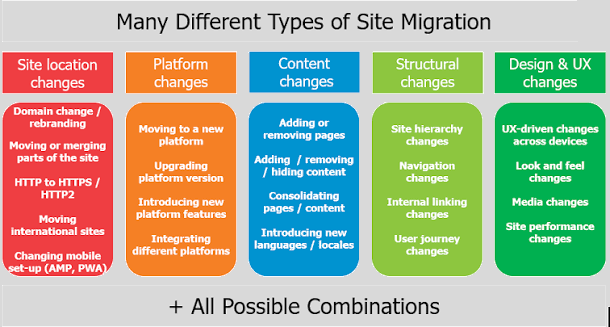
A website migration involves significant changes to a website's structure, platform, URLs, domain, or content.
Examples include moving from one website builder to another, changing domains, restructuring service pages, consolidating content, or launching a complete redesign.
Some migrations involve only minor technical changes.
Others affect hundreds or thousands of pages.
The greater the changes, the more important it becomes to plan carefully.
Existing URLs Have Value
Imagine a roofing company has a page ranking well for commercial roof replacement.
Its existing URL is:
During a redesign, someone changes that address to:
The new address may be perfectly reasonable.
However, if the old URL disappears without an appropriate redirect, visitors and search engines following existing links may encounter an error.
A permanent redirect can direct requests from the old address to the relevant new destination.
Google recommends permanent server-side redirects when a URL has moved permanently.
Create a URL Inventory Before Launching
Before replacing an existing website, identify important pages.
This includes service pages, location pages, blog articles, contact pages, and other URLs receiving meaningful traffic or backlinks.
Review current organic performance where data is available.
Which pages attract visitors?
Which pages generate inquiries?
Which URLs have valuable external links?
Which pages should remain unchanged?
This inventory becomes a reference during migration planning.
Without it, businesses may accidentally remove content that took years to develop search visibility.
Preserve Valuable Content
A redesign does not require deleting everything.
Existing content may already answer important customer questions and rank for relevant searches.
Instead of automatically replacing every page, evaluate its performance and usefulness.
Some pages may benefit from updated formatting or clearer calls to action.
Others may require substantial improvements.
Outdated or unnecessary pages may be candidates for consolidation.
The objective is to improve the website without casually discarding valuable resources.
Metadata Needs Attention
Page titles and meta descriptions frequently disappear or change during platform migrations.
A service page previously titled "Emergency Plumbing Repair in Chicago" might become simply "Services."
That removes useful context.
Important pages should retain descriptive, accurate title elements and appropriate meta descriptions.
Headings should also reflect page content.
Our SEO services consider these technical and content-related details when evaluating website performance.
Check Canonical Tags and Indexing Directives
Canonical tags help indicate preferred URLs when duplicate or substantially similar content exists.
Indexing directives communicate whether search engines should index certain pages.
During website development, staging environments are sometimes configured to discourage indexing.
That can be appropriate before launch.
Problems arise when restrictive directives accidentally remain on the live website.
A page containing a noindex directive may be excluded from search results even when the business wants it indexed.
These settings deserve careful review.
Internal Links Must Follow the New Structure
Changing URLs affects more than external links.
Website navigation, service descriptions, blog articles, buttons, and footer links may still reference old addresses.
Although redirects can help, updating internal links to their intended destinations creates a cleaner structure.
Test navigation on desktop and mobile devices.
Make sure visitors can reach important services without encountering broken links or confusing paths.
Submit an Updated Sitemap
An XML sitemap can help search engines discover important website URLs.
After a migration, the sitemap should reflect the new site structure and avoid listing obsolete URLs as current destinations.
Google Search Console provides tools for submitting sitemaps and reviewing indexing information.
A sitemap does not guarantee indexing, but it can support discovery and monitoring.
Monitor Performance After Launch
Launching the website is not the final step.
Review Search Console for indexing problems, crawl errors, and changes in search performance.
Monitor organic traffic and conversions.
Test important redirects.
Check contact forms, appointment systems, and phone links.
Compare results against pre-migration performance while recognizing that search demand and other factors can influence traffic.
Some fluctuations may occur while search engines process changes.
Significant or persistent declines deserve investigation.
Design and SEO Should Work Together
A visually attractive website that customers cannot discover provides limited value.
Likewise, a website that ranks well but frustrates visitors may struggle to convert traffic into leads.
Successful redesigns consider appearance, functionality, content, search visibility, and conversion opportunities together.
At Shane Worley The Marketing 1 LLC, we help businesses connect website improvements with broader digital marketing strategies.
If you are considering a website redesign, platform change, or domain migration, contact our team.
A new website should help move your business forward—not erase years of search visibility.

Contact Us
Copyright 2023 Shane Worley The Marketing 1 LLC All Rights Reserved


Email: [email protected]
Mobile: (815 849-8327Address:
610 Meacham Rd #1190, Elk Grove Village, IL 60007