

Insights That Drive Results: Shane Worley The Marketing 1 Blog
Welcome to the official blog of Shane Worley the Marketing 1 LLC—your go-to source for real, practical, and proven strategies in SEO, Google Ads, and social media marketing. Whether you're a small business owner aiming to boost visibility or a service-based company looking to convert more leads, our blog is packed with up-to-date tips, how-to guides, and expert insights. We don’t just talk trends—we share what actually works. Dive in, explore freely (no subscriptions here), and take your marketing efforts to the next level.

XML Sitemaps Explained: Why Your Website Needs One
XML Sitemaps Explained: Why Your Business Website Needs One
You create a new service page, publish it on your website, and wait for it to appear on Google. A week later, you search for it and find nothing. What happened?
Publishing a webpage doesn't automatically guarantee that search engines will immediately discover or index it. Google first needs to find the URL, crawl the page, understand its content, and determine whether it belongs in its search index.
An XML sitemap helps search engines discover the pages you consider important.
It's one of those technical SEO elements most customers will never see, yet it can play an important supporting role in how search engines crawl your website. For businesses investing in search engine optimization, maintaining a clean XML sitemap should be part of the technical foundation.
What Is an XML Sitemap?
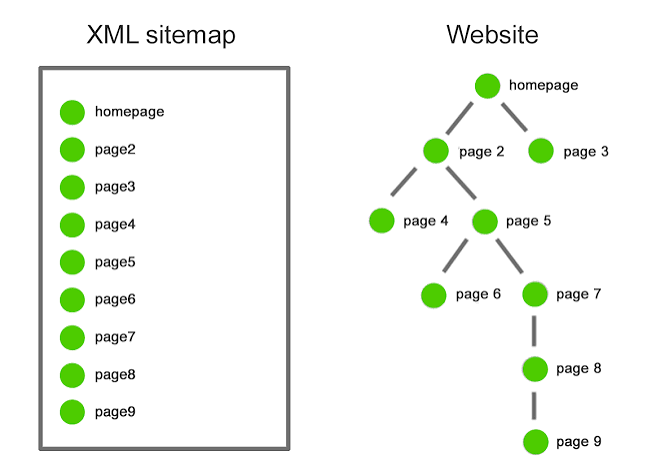
An XML sitemap is a file containing information about important URLs on your website.
Unlike your main navigation, which is primarily created for visitors, an XML sitemap is built primarily for search engines.
A typical sitemap may contain URLs for your:
Homepage
Service pages
Location pages
Blog articles
Product pages
Contact page
Other important resources
The sitemap essentially provides search engines with an organized list of pages you'd like them to know about.
Google states that a sitemap provides information about the pages, videos, and other files on a website and the relationships between them. Google
Does Every Website Need an XML Sitemap?
Technically, no.
Google can discover pages through internal links even without a sitemap.
A small website with excellent internal linking may be crawled successfully without one. However, there's little reason for a business website to make discovery harder than necessary.
Sitemaps become particularly helpful for:
Large websites
New websites
Websites with extensive archives
Sites publishing content frequently
Ecommerce websites
Websites with pages that aren't heavily internally linked
Even relatively small service-business websites can benefit from having a properly configured sitemap.
Think of it as giving search engines a directory instead of asking them to find every room in the building themselves.
A Sitemap Doesn't Guarantee Rankings
This distinction is important.
Adding a URL to your sitemap doesn't mean Google will automatically index it.
It also doesn't mean the page will rank.
A sitemap helps with discovery. The page itself still needs to provide enough value for search engines to determine that indexing it makes sense.
Quality still matters.
That means your pages should contain useful information, have a clear purpose, and provide a good experience for visitors.
A sitemap can show Google where your content is. It can't make weak content great.
Which Pages Should Be Included?
Your XML sitemap should generally contain the canonical URLs you want search engines to discover and potentially index.
Examples might include:
Primary service pages
Unique service-area pages
Educational blog posts
Important company information
Valuable resource pages
Pages you intentionally don't want indexed generally shouldn't appear in the sitemap.
This is where XML sitemaps connect with other technical SEO elements such as canonical tags, indexing directives, redirects, and internal links.
Every signal should tell a consistent story.
Avoid Filling Your Sitemap With Junk URLs
More URLs don't automatically create better SEO.
A sitemap filled with unnecessary pages can become cluttered with URLs that offer little search value.
Examples might include:
Duplicate pages
Test pages
Old campaign pages
Redirected URLs
Broken URLs
Internal search results
Unnecessary system-generated pages
Your sitemap should represent the pages you consider valuable.
If you wouldn't want a potential customer finding a particular page through Google, ask why you're encouraging search engines to discover it.
XML Sitemaps and Internal Linking Work Together
A sitemap should never replace good website navigation.
Important pages should still receive internal links from relevant areas of your website.
For example, your SEO services should be accessible from your main service structure. Your social media marketing services should connect naturally with related resources. Blog articles should link to appropriate services and other educational content.
Internal links help search engines understand relationships between pages.
The sitemap helps with discovery.
Using both creates a stronger website structure.
What Happens When You Publish New Blog Content?
Blogging provides an excellent example of why sitemaps matter.
Suppose you publish two educational articles every month. After a year, you've created 24 additional URLs.
A properly configured website can automatically add those new articles to the XML sitemap.
Search engines can then discover the updated sitemap and find the newly published URLs.
This doesn't guarantee indexing, but it gives search engines another pathway to your content.
That's especially valuable as your marketing blog continues growing.
What About Location Pages?
Local businesses frequently create pages targeting different service areas.
For example, an Illinois contractor may legitimately serve:
Rockford
Loves Park
Belvidere
Roscoe
Machesney Park
Unique, valuable location pages can be included in the sitemap.
However, businesses should avoid creating dozens of nearly identical city pages where only the city name changes.
Search visibility should be built around useful information rather than mass-produced pages.
Each location page should answer questions relevant to customers in that area and clearly explain the services available there.
How Do Search Engines Find Your Sitemap?
XML sitemaps are commonly referenced through a website's robots.txt file and can also be submitted directly through search engine webmaster platforms.
For Google, website owners can use Google Search Console to submit a sitemap and review whether Google can access it.
Search Console can also provide valuable information about indexing and crawling.
This gives business owners and SEO professionals additional visibility into how Google interacts with the website.
Your Sitemap Needs Maintenance
Like many technical SEO elements, an XML sitemap shouldn't be created and forgotten.
Website changes can introduce problems.
A redesign might alter URLs. Services may be removed. Old pages may redirect elsewhere. New sections may be created.
Periodic technical reviews should verify that the sitemap:
Loads correctly
Contains important URLs
Excludes unwanted URLs
Uses preferred canonical versions
Doesn't contain broken pages
Reflects the current website structure
This is one reason periodic SEO audits are valuable.
XML Sitemaps Are One Piece of Technical SEO
A sitemap isn't a magic ranking button.
It works alongside other elements including:
Canonical tags
Schema markup
Internal linking
Robots.txt
Mobile usability
Page speed
HTTPS
Helpful content
At Shane Worley, the Marketing 1, we look at these components collectively because technical SEO problems rarely exist in isolation.
Your website needs to be discoverable, understandable, useful, and easy for customers to use.
Final Thoughts
An XML sitemap may look like a simple list of URLs, but its purpose is important: helping search engines discover the pages your business considers valuable.
A properly maintained sitemap supports crawling and indexing while giving your website a cleaner technical structure. It becomes increasingly useful as your site grows with additional services, locations, resources, and blog content.
If you're unsure whether your website has an XML sitemap—or whether it's filled with outdated or unnecessary URLs—a technical review can provide answers.
Shane Worley, the Marketing 1 helps businesses strengthen their websites through SEO, technical optimization, content strategy, pay-per-click advertising, and social media marketing.
Explore our digital marketing services, or contact Shane Worley, the Marketing 1 to discuss opportunities to improve your website's search performance.

Contact Us
Copyright 2023 Shane Worley The Marketing 1 LLC All Rights Reserved


Email: [email protected]
Mobile: (815 849-8327Address:
610 Meacham Rd #1190, Elk Grove Village, IL 60007