
How Internal Linking Improves SEO More Than Most Businesses Realize
How Internal Linking Improves SEO More Than Most Businesses Realize
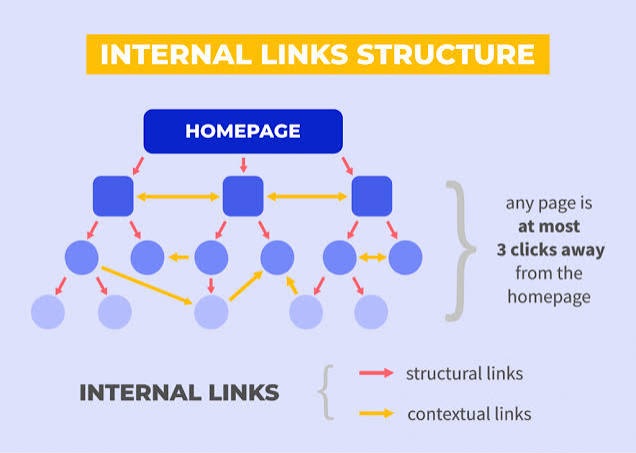
When business owners think about SEO, they often focus on keywords, backlinks, or writing blog articles. While all of those elements matter, one of the most overlooked optimization techniques is internal linking.
Internal links connect one page of your website to another. They help visitors continue learning about your services while also helping search engines understand how your website is organized. A thoughtful internal linking strategy can improve user experience, distribute authority throughout your site, and strengthen your visibility in search results.
The best part is that internal linking is entirely under your control. Unlike earning backlinks from other websites, you can improve your internal link structure whenever you update existing pages or publish new content.
Let's look at why internal linking deserves a larger role in your SEO strategy.
What Is an Internal Link?
An internal link is simply a hyperlink that points to another page on the same website.
For example, a blog discussing local SEO might naturally link to:
Your SEO services page
A blog about Google Business Profile optimization
Your website design services
A contact page
Another related article
These connections create pathways that allow both visitors and search engines to move throughout your website.
Think of internal links as roads connecting neighborhoods in a city. Without those roads, every destination becomes much harder to reach.
Internal Links Help Search Engines Discover Pages
Search engines use automated crawlers to discover and index webpages.
Internal links help those crawlers navigate your website efficiently.
When an important page has very few internal links pointing to it, search engines may view it as less significant than pages receiving many internal references.
Google Search Central explains that internal linking helps search engines understand your site's structure and discover important content.
A well-connected website is generally easier to crawl and understand.
They Show Relationships Between Topics
Internal links also help establish topical relevance.
Imagine you own a digital marketing agency.
You might have pages covering:
SEO services
Google Ads management
Website design
Social media marketing
Reputation management
Local SEO
Content marketing
Each of these services relates to digital marketing.
By naturally linking these pages together, you help search engines understand that your website provides comprehensive expertise in this subject area.
This strengthens topical authority over time.
Visitors Stay Longer
Internal links don't only benefit search engines.
They improve the experience for your visitors.
Suppose someone finds your article about improving Google Business Profile rankings.
After reading it, they notice links to:
Local SEO
Website optimization
Online reviews
Schema markup
Contacting your agency
Instead of leaving your website, they continue exploring.
Longer visits often lead to:
More page views
Better engagement
Greater trust
More opportunities to convert visitors into customers
Helping visitors find additional valuable information benefits everyone.
Internal Links Help Distribute Authority
Some pages naturally receive more attention than others.
For example:
Your homepage
Popular blog articles
Frequently shared resources
These pages often attract backlinks from other websites.
Internal links allow some of that authority to flow toward other important pages that may not yet have many external links.
Think of it like sharing resources across a team.
Instead of one page carrying all the strength, internal linking helps support your entire website.
Anchor Text Matters
Anchor text is the clickable wording within a hyperlink.
Instead of writing:
"Click here."
Consider writing:
"Learn more about our SEO services."
Descriptive anchor text helps both visitors and search engines understand what they'll find after clicking.
Good examples include:
Local SEO services
Website design
Google Ads management
Contact our team
Read our SEO guide
Avoid overusing identical keyword-rich anchor text repeatedly.
Natural language is generally the best approach.
Every Service Page Should Connect to Related Pages
Many business websites isolate their service pages.
Instead, each page should guide visitors toward additional relevant information.
For example:
A Website Design page might link to:
SEO Services
Google Ads
Content Marketing
Website Audits
Contact Us
Likewise, an SEO page might link back to Website Design because both services often work together.
These connections improve navigation while reinforcing topical relationships.
Blog Articles Create Internal Linking Opportunities
Blogging is one of the easiest ways to strengthen your internal linking structure.
Every new article creates opportunities to link toward:
Core service pages
Previous blog articles
Case studies
Contact forms
Frequently asked questions
Over time, your website develops a strong network of interconnected content.
This benefits both readers and search engines.
Avoid Orphan Pages
An orphan page is a webpage with little or no internal links pointing toward it.
Even if the page contains excellent information, visitors and search engines may struggle to discover it.
During regular website maintenance, review your pages and ask:
Can visitors easily find this page?
Does another page naturally link here?
Should this page appear in navigation?
Could related blog articles reference it?
Every valuable page should have a purpose within your website's structure.
Balance Is Important
Internal linking should feel natural.
Adding dozens of unnecessary links to every page doesn't improve SEO.
Instead:
Link where it provides value.
Help readers continue learning.
Connect related topics.
Avoid forcing links that don't fit the content.
Quality always outweighs quantity.
Visitors appreciate helpful recommendations, not clutter.
Keep Older Content Updated
Many businesses publish blog articles and never revisit them.
One of the easiest SEO improvements is updating older content with links to newer pages.
For example:
An article published two years ago can now reference:
New services
Recent blog posts
Updated FAQs
New case studies
This keeps your content current while strengthening your internal linking structure.
How Shane Worley, the Marketing 1 Builds Strong Internal Linking Strategies
At Shane Worley, the Marketing 1, internal linking is planned as part of every website and SEO strategy.
We don't simply publish pages and hope customers find them.
Instead, we build logical pathways that connect:
Service pages
City pages
Blog articles
Contact pages
Educational resources
This organized structure improves user experience while helping search engines understand the relationships between topics across your website.
As your content library grows, these connections become even more valuable.
Final Thoughts
Internal linking may not receive as much attention as backlinks or keyword research, but it remains one of the most effective ways to improve both SEO and user experience.
A thoughtful internal linking strategy helps search engines understand your website, encourages visitors to explore additional content, distributes authority across important pages, and supports higher conversion opportunities.
If your website has grown over time, reviewing your internal links could uncover valuable opportunities to strengthen your SEO without creating entirely new content.
At Shane Worley, the Marketing 1, we help businesses develop organized website structures that support long-term search visibility, better user engagement, and measurable business growth.