
How Title Tags and Meta Descriptions Affect SEO
How Title Tags and Meta Descriptions Affect SEO and Clicks
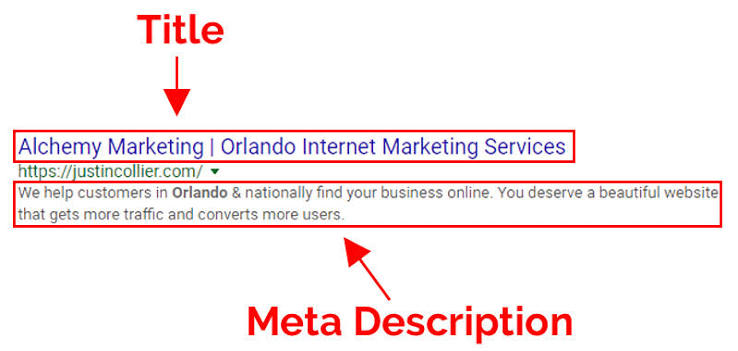
Your business earns a spot on the first page of Google. Mission accomplished, right?
Not quite.
A potential customer still has to choose your result.
Depending on the search, that person may see advertisements, map results, organic listings, videos, images, and competitors competing for attention. Two small pieces of website information can have a major influence on what happens next: your title tag and meta description.
These elements help communicate what a webpage offers before someone visits it. Well-written meta data can make a search result clearer, more relevant, and more compelling to the people you want to reach.
For businesses investing in search engine optimization, title tags and meta descriptions deserve more attention than simply filling empty SEO fields before publishing a page.
What Is an SEO Title Tag?
A title tag is HTML that identifies the title of a webpage.
Search engines may use it when creating the clickable headline shown in search results.
For example, a plumbing company might use:
Emergency Plumber in Rockford, IL | ABC Plumbing
Compare that with:
Home | ABC Plumbing
The first provides considerably more information.
Before visiting the website, a potential customer can immediately understand the service and geographic relevance.
That's the job of a strong SEO title: clearly communicate what the page is about.
What Is a Meta Description?
A meta description is a short HTML description summarizing a webpage.
Search engines may display it beneath the search result title.
For example:
Need emergency plumbing service in Rockford? Get fast help for leaking pipes, clogged drains, water heaters, and other urgent plumbing problems.
The description gives the searcher additional context before clicking.
A good meta description answers a simple question:
Why should I visit this page?
Does Google Always Use Your SEO Title?
No.
This surprises many business owners.
Google may generate a different title link based on the webpage and the user's search.
Google can consider information such as:
The HTML title element
Main visual title
Headings
Other prominent page text
Anchor text from links
That doesn't make your title tag irrelevant.
It means your title should accurately reflect the content visible on the page.
Trying to create a search headline that doesn't match the actual page can produce inconsistent results.
Does Google Always Show Your Meta Description?
Again, no.
Google may use your written meta description, but it can also generate a snippet from page content when another section better matches a particular search.
Imagine your page discusses five different appliance repair services.
Someone searches specifically for dishwasher repair.
Google may choose text from your dishwasher section instead of your general meta description because that information better matches the query.
This is another reason quality page content matters.
Meta data and visible content should support each other.
Title Tags Can Influence Search Relevance
A clear title helps search engines and users understand a page's primary topic.
Consider these examples:
Services
versus:
Local SEO Services for Small Businesses
The second provides meaningful context.
However, adding every keyword imaginable isn't the answer.
A title such as:
SEO Company SEO Services Best SEO Agency Local SEO Cheap SEO
looks like it was written for a robot having a bad day.
Titles should be concise, descriptive, and natural.
Meta Descriptions Can Influence Clicks
Meta descriptions aren't generally treated as direct ranking factors, but they can influence whether someone chooses your result.
Suppose two companies appear next to each other.
Company A:
Welcome to our website. Learn more about us.
Company B:
Need furnace repair in Rockford? Schedule service for heating problems, strange noises, poor airflow, and other common furnace issues.
Which result better matches the customer's need?
The second description communicates immediate relevance.
That's why meta data should be written for people first.
Every Important Page Needs Unique Meta Data
Copying the same title and description across your entire website wastes valuable opportunities.
Different pages serve different purposes.
Your homepage may focus on the overall business.
A service page should focus on a particular offering.
A location page should communicate geographic relevance.
A blog article should explain the specific question being answered.
Unique meta data helps differentiate those pages.
Keep Titles Focused
There isn't one fixed character count that guarantees Google will display an entire title because search results are influenced by available display space and other factors.
Still, excessively long titles are more likely to be shortened.
A practical title should usually contain:
Primary topic
Geographic modifier when relevant
Brand name when useful
Don't try to fit the entire webpage into the title.
The goal is clarity, not keyword bingo.
Meta Descriptions Should Encourage the Right Click
Getting more clicks isn't always the objective.
You want qualified clicks.
If your company doesn't provide free services, don't write "Free Service" simply because you think it will increase click-through rates.
Visitors will quickly leave after discovering the mismatch.
Instead, communicate genuine advantages such as:
Free estimates
Same-day appointments
Specific service areas
Years of experience
Specialized services
Accuracy creates better traffic.
Search Intent Should Guide Meta Data
Metadata should reflect what someone expects after searching.
Consider:
Informational Search:
"What is schema markup?"
A strong title might be:
What Is Schema Markup? A Guide for Business Owners
Now consider:
Commercial Search:
"SEO company Illinois"
The page title should communicate SEO services and geographic relevance rather than presenting an educational definition of SEO.
Matching meta data with search intent creates a clearer path from search result to webpage.
Local Businesses Should Use Geographic Terms Naturally
Location can be valuable in titles where geographic intent exists.
Examples include:
Roofing Contractor in Rockford, IL
Appliance Repair in Loves Park, IL
Plumbing Services in Belvidere, IL
However, don't cram ten cities into one title.
If your business serves multiple communities, properly developed service area pages can target those locations individually.
This creates cleaner meta data and more useful pages.
Update Meta Data When Pages Change
Websites evolve.
Services change. Businesses expand. Pages are rewritten. Search strategies improve.
Meta data should be reviewed alongside those changes.
An SEO title written five years ago may no longer accurately represent the page.
Periodic SEO audits can identify:
Missing titles
Duplicate titles
Missing descriptions
Duplicate descriptions
Outdated wording
Poor search-intent alignment
These are often relatively simple fixes with meaningful benefits.
Meta Data Matters for Paid Landing Pages Too
While SEO titles and meta descriptions primarily support organic search, the underlying lesson applies throughout digital marketing:
Your message should match the visitor's expectation.
Someone clicking a pay-per-click advertisement should land on a page that immediately reflects the ad they clicked.
The same principle applies to visitors coming from social media marketing.
Consistency between the initial message and destination page helps build confidence.
Don't Optimize Meta Data in Isolation
A fantastic title can't save a poor webpage.
Metadata should accurately represent strong content.
That means your page still needs:
Helpful information
Logical headings
Internal links
Clear calls-to-action
Fast performance
Mobile usability
Relevant images
Trust signals
SEO works best when all of these elements support one another.
At Shane Worley, the Marketing 1, meta data optimization is part of a larger strategy connecting technical SEO, content, website structure, local search, and conversions.
Final Thoughts
Title tags and meta descriptions may occupy only a small amount of space in your website's code, but they can have an important job.
They introduce your webpage before the visitor arrives.
Strong metadata helps communicate relevance, distinguish your pages, and encourage qualified searchers to click through to your website.
Don't treat these fields as an afterthought.
Give every important page a clear SEO title, an informative meta description, and content that fulfills the promise made in the search result.
Explore more strategies on the Shane Worley, the Marketing 1 blog, browse our digital marketing services, or contact us to discuss improving your website's organic search performance.