
What Is Keyword Cannibalization and How Can It Hurt SEO?
What Is Keyword Cannibalization and How Can It Hurt Your SEO?
Creating more website content is generally good for SEO. Every useful service page, location page, FAQ, and blog article gives your business another opportunity to answer customer questions and appear in search results.
But more isn't automatically better.
As a website grows, multiple pages can begin covering nearly identical topics. Instead of strengthening your search presence, those pages may compete with one another for the same searches.
This situation is commonly called keyword cannibalization.
The name sounds dramatic, but the concept is straightforward: your website has multiple pages trying to accomplish essentially the same job.
For businesses investing in SEO services, identifying overlapping content can help create a clearer website structure and ensure each important page has a distinct purpose.
What Is Keyword Cannibalization?
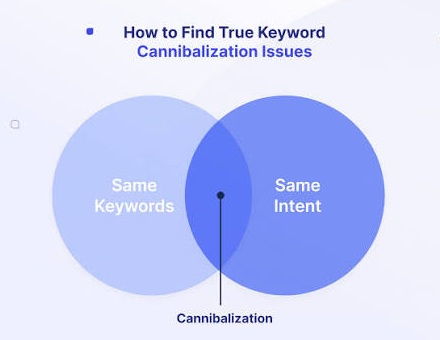
Keyword cannibalization occurs when multiple pages on the same website target the same or substantially similar search intent.
Suppose a marketing agency has these pages:
/seo-services
/search-engine-optimization
/professional-seo
/best-seo-services
If all four pages provide essentially the same information and target the same customers, what is each page supposed to rank for?
Search engines now have several similar options from the same website.
The problem isn't simply that multiple pages mention "SEO."
Related pages should naturally discuss overlapping subjects.
The issue appears when several URLs serve essentially identical purposes.
Similar Keywords Don't Automatically Mean Cannibalization
This distinction is important.
Your website can have hundreds of pages containing the phrase "digital marketing" without creating a problem.
For example, these pages have different purposes:
What Is Digital Marketing?
Informational intent.
Digital Marketing Services
Commercial intent.
How Much Does Digital Marketing Cost?
Research intent.
Digital Marketing Agency in Rockford
Local commercial intent.
The topic overlaps, but each page answers a different question.
Search intent matters more than simply counting keyword appearances.
How Does Cannibalization Happen?
Keyword cannibalization often develops gradually.
A business launches with several core service pages.
Then it begins blogging.
A few years later, dozens or hundreds of articles have accumulated.
Someone publishes:
"Why Local SEO Matters for Small Businesses."
Six months later:
"The Importance of Local SEO."
Then:
"Why Your Business Needs Local SEO."
Eventually, several articles are saying nearly the same thing.
Nobody intentionally created the overlap. It happened because there wasn't a clear content strategy.
Can Multiple Pages Rank for the Same Keyword?
Absolutely.
Having multiple URLs appear for related searches isn't inherently bad.
A business might have both a service page and an educational article appearing for similar terms.
That can actually increase visibility.
The concern is whether those pages provide different value.
If Google can clearly understand why both pages exist, there may be no problem.
Google encourages website owners to create helpful, people-first content rather than pages created primarily to manipulate search rankings.
Every page should therefore earn its place on your website.
Warning Signs of Keyword Cannibalization
Several patterns can indicate overlapping content.
Rankings Frequently Switch Between URLs
You may notice one page ranking for a keyword one week and another page replacing it later.
That doesn't automatically prove cannibalization, but it's worth investigating.
Several Pages Target the Same Intent
If you can't explain the difference between two pages in one sentence, visitors and search engines may have the same problem.
Similar Articles Accumulate Over Time
Older blogs are particularly susceptible.
Content calendars should consider what already exists before publishing another article.
Internal Links Point to Different Pages for the Same Topic
Suppose some pages link "SEO services" to one URL while others use another.
That inconsistent structure may indicate you haven't clearly established which page is primary.
Why Content Planning Matters
Before creating a new page, ask:
Do we already have content answering this question?
Sometimes the best SEO strategy isn't publishing another article.
It may be improving an existing one.
You could add:
Updated information
New FAQs
Better examples
Recent statistics
Improved internal links
Stronger calls-to-action
Updating a strong existing resource can provide greater value than creating another page covering nearly identical information.
When Should Pages Be Combined?
Suppose you discover three older articles discussing essentially the same topic.
If none performs particularly well independently, consolidating the strongest information into one comprehensive resource may make sense.
The weaker URLs can potentially be redirected to the preferred page when appropriate.
This creates one stronger destination rather than several thin ones.
However, redirects should be planned carefully.
Deleting URLs without reviewing backlinks, traffic, rankings, and internal links can create new SEO problems.
Canonical Tags Aren't a Universal Fix
Because canonical tags help search engines manage duplicate or very similar URLs, businesses sometimes assume they can solve every cannibalization issue.
They can't.
If you've intentionally created four nearly identical service pages targeting the same customers, adding canonical tags doesn't fix the underlying content strategy.
The better question is:
Why do all four pages exist?
Canonicalization is a technical tool, not a substitute for good website architecture.
Internal Linking Can Clarify Page Importance
Internal links help establish relationships between pages.
Suppose you publish an article titled:
How Long Does SEO Take?
That educational article can naturally link to your primary SEO services page.
The article answers a question.
The service page explains how someone can hire your agency.
Each has a different job.
Internal linking connects the two while helping customers progress from education to consideration.
Build Topic Clusters Instead of Duplicate Pages
A strong content strategy can organize related articles around a central service.
For SEO, your website might contain articles about:
Schema markup
XML sitemaps
Robots.txt
Internal linking
Backlinks
Local citations
Core Web Vitals
Search intent
These articles all relate to SEO without duplicating one another.
They can then link naturally to the central SEO service page and to other relevant resources on your marketing blog.
This builds depth around a subject while preserving a distinct purpose for every article.
Service Area Pages Require Special Attention
Location pages can also create overlap.
Imagine a contractor serving several Illinois communities.
Individual city pages can make sense because users searching in Rockford may have different geographic intent from users searching in Belvidere.
However, duplicating the exact same page and swapping city names provides little unique value.
Each location page should contain useful information about serving customers in that particular area.
Geographic relevance should be genuine.
Review Search Performance Before Making Changes
Don't start deleting pages simply because two articles mention the same keyword.
First evaluate:
Organic traffic
Search queries
Rankings
Backlinks
Conversions
Internal links
Search intent
Two seemingly similar pages may actually perform well for completely different searches.
Data should guide the decision.
SEO cleanup without analysis can do more harm than good.
How Shane Worley, the Marketing 1 Approaches Content Structure
At Shane Worley, the Marketing 1, we view SEO content as an interconnected system.
Every page should have a clear purpose.
That includes understanding how your:
Service pages
Location pages
Blog articles
FAQs
Landing pages
support one another.
Our digital marketing services combine content strategy with technical SEO, pay-per-click advertising, and social media marketing so each channel contributes to a larger business objective.
Final Thoughts
Keyword cannibalization isn't about being afraid to mention the same keyword twice.
It's about preventing multiple webpages from unnecessarily competing to satisfy the same search intent.
As your website grows, periodically review existing content before publishing something new. Strengthen older articles where appropriate, consolidate unnecessary overlap, maintain clear internal linking, and give every important page a distinct purpose.
Sometimes better SEO doesn't require adding more pages.
Sometimes it means making the pages you already have work harder.
Visit the Shane Worley, the Marketing 1 blog for additional SEO resources, or contact us to discuss an SEO audit and content strategy for your business website.