
How Customer Lifetime Value Can Transform Your Marketing Budget
Why Customer Lifetime Value Should Influence Every Marketing Decision
Many business owners measure marketing success by how much it costs to acquire a new customer. While customer acquisition costs matter, focusing exclusively on the initial sale can lead to missed opportunities and poor budgeting decisions.
A customer who spends $200 today might eventually generate thousands of dollars in additional revenue through repeat purchases, ongoing services, and referrals.
Understanding that long-term value can change how businesses approach advertising, SEO, customer retention, and growth.
What Is Customer Lifetime Value?
Customer lifetime value, commonly abbreviated as CLV or LTV, estimates the revenue or economic value a customer contributes throughout their relationship with a business.
Consider an HVAC company providing seasonal maintenance services.
A customer might initially spend $150 on a maintenance appointment. Over several years, that customer could purchase additional maintenance, repairs, and eventually a replacement system.
The initial $150 transaction represents only a fraction of the relationship's potential value.
Businesses that understand this distinction can make more informed decisions about how much they can reasonably invest in acquiring customers.
Why Acquisition Cost Alone Can Be Misleading
Imagine two marketing campaigns.
Campaign A generates customers at an acquisition cost of $75.
Campaign B generates customers at an acquisition cost of $150.
At first glance, Campaign A appears more efficient.
However, suppose customers from Campaign A typically make one $200 purchase, while customers from Campaign B frequently purchase recurring services totaling $2,000 over several years.
Campaign B may deliver considerably greater long-term value.
The important question becomes whether the additional revenue also produces enough profit to justify the acquisition and service costs.
Marketing decisions should consider customer quality, profitability, and retention—not simply the cheapest possible lead.
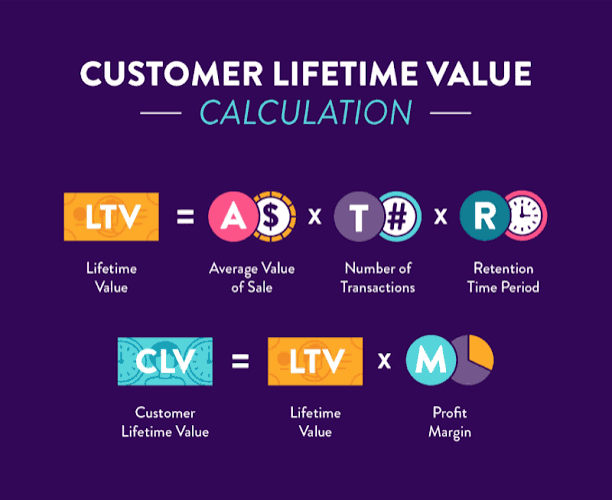
Calculate Customer Lifetime Value
A simplified revenue-based calculation is:
Average Purchase Value × Purchase Frequency × Customer Relationship Duration = Estimated Customer Lifetime Revenue
Suppose a customer spends an average of $250 per transaction, purchases three times annually, and remains a customer for four years.
That relationship could generate approximately $3,000 in revenue.
This calculation does not account for operating costs, discounts, or profit margins, but it provides a useful starting point.
Businesses seeking more accurate financial decisions should also evaluate contribution margins and the costs associated with retaining and servicing customers.
Customer Retention Deserves Marketing Attention
Acquiring customers is important, but keeping satisfied customers can create additional opportunities.
Email reminders, seasonal service notifications, loyalty programs, educational content, and consistent communication can encourage customers to return.
For example, an appliance repair company might send helpful maintenance reminders to previous customers.
A roofing contractor could provide seasonal inspection information.
A landscaping company might promote spring cleanup services to customers who previously purchased fall maintenance.
These communications work best when they provide genuine value rather than constant promotional pressure.
SEO Can Attract Customers With Long-Term Potential
Search engine optimization helps businesses become discoverable when potential customers research products and services.
However, SEO strategies should consider which services attract valuable customer relationships.
A company might receive substantial traffic for an inexpensive, one-time service while another service attracts fewer searches but generates ongoing business.
Both can be valuable, but they may deserve different levels of investment.
At Shane Worley The Marketing 1 LLC, our SEO services help businesses focus on relevant search opportunities connected with their actual business objectives.
Paid Advertising Should Consider Customer Value
Google Ads and social media advertising can produce measurable inquiries, but evaluating campaigns solely through cost per lead can overlook important differences.
A campaign generating expensive leads may still be profitable when those leads become high-value customers.
Conversely, inexpensive leads may provide limited value if customers rarely purchase or require excessive resources.
Our pay-per-click advertising services emphasize performance measurement and ongoing optimization so businesses can make informed spending decisions.
Customer Experience Influences Lifetime Value
Marketing creates expectations.
Customer service determines whether those expectations are fulfilled.
A business promising exceptional service must deliver that experience consistently.
Clear communication, dependable scheduling, quality work, and professional follow-up can encourage repeat business.
Customers who feel appreciated are also more likely to recommend a company to friends, family members, and colleagues.
Those referrals can create additional business opportunities without requiring the same advertising investment as acquiring completely unfamiliar customers.
Use Customer Data Responsibly
Businesses can evaluate purchase history, service frequency, customer feedback, and retention patterns to identify opportunities.
Customer relationship management systems can help organize this information.
However, businesses should protect customer information, respect communication preferences, and follow applicable privacy requirements.
Good customer relationships depend on trust.
Build Marketing Around Profitable Relationships
Customer lifetime value encourages businesses to look beyond the next transaction.
It connects marketing investments with customer retention, service quality, repeat purchases, and long-term profitability.
Rather than asking only, "How cheaply can we acquire another customer?" businesses can ask, "Which marketing activities help us build profitable customer relationships?"
That question creates a stronger foundation for sustainable growth.
Shane Worley The Marketing 1 LLC helps small and service-based businesses connect digital marketing activities with measurable business opportunities.
Explore our marketing services or contact us to discuss strategies that support both customer acquisition and long-term business growth.