
Marketing Attribution: Know What Generates Leads Before Spending More
Why Marketing Attribution Matters Before You Increase Your Advertising Budget
A customer calls your business after finding you online.
Great news.
Now comes an important question: What actually caused that customer to contact you?
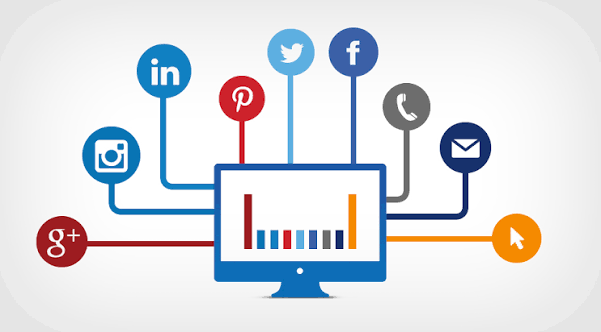
Was it Google Ads? Organic search? Facebook? A Google Business Profile? A referral? A blog article? Did the customer first discover the business through social media and later search for the company by name?
Without reliable tracking, businesses can end up making marketing decisions based largely on assumptions.
That becomes particularly risky when deciding where to increase or reduce advertising spending.
Leads Rarely Follow a Perfect Straight Line
It would be convenient if every customer journey looked like this:
Customer sees advertisement. Customer clicks advertisement. Customer buys.
Sometimes that happens.
Other journeys contain several interactions.
Someone might see a business on Facebook, visit its website, leave, search for the company several days later, read Google reviews, return to the website, and finally call.
Which marketing channel gets credit?
That question introduces marketing attribution.
Attribution helps businesses understand the interactions contributing to leads and sales.
Why Attribution Matters for Small Businesses
Small businesses usually have finite marketing budgets.
If $3,000 is being invested each month across SEO, PPC, social media, and other channels, the business owner should have some understanding of what those investments are producing.
Without attribution, it becomes easy to make decisions based on whichever activity is most visible.
Social media gets likes, so perhaps social media must be working.
Google Ads produces clicks, so perhaps PPC deserves the entire budget.
Organic traffic increases, so maybe advertising is unnecessary.
Each conclusion could be premature.
Different channels can play different roles.
Social media might introduce the brand. SEO might capture later research. PPC might reach someone when purchase intent becomes stronger.
Understanding those relationships produces better conversations about marketing performance.
Track Meaningful Conversions
Website traffic is useful, but businesses should identify the actions that matter most.
Depending on the company, those could include phone calls, quote requests, appointment bookings, contact-form submissions, online purchases, or other qualified inquiries.
A dashboard filled with impressive-looking graphs is useless if nobody can explain whether marketing contributed to revenue opportunities.
This is why Shane Worley The Marketing 1 LLC emphasizes dashboard transparency across our digital marketing services.
Business owners should understand what they are paying for and what the available data says.
Attribution Can Expose Surprises
Marketing data does not always confirm expectations.
A business might discover that a campaign generating fewer leads actually produces larger jobs.
Another channel might generate a high volume of inquiries that rarely become paying customers.
A certain landing page may receive substantial traffic but produce few actions.
One geographic market might outperform another.
These insights allow businesses to ask better questions.
Instead of saying, “Should we spend more on advertising?” the conversation becomes, “Which campaigns are producing qualified opportunities, and where could additional investment make sense?”
That is a much stronger starting point.
Attribution Is Not Perfect
No tracking system sees everything.
Customers switch devices. Privacy settings can limit data. People clear cookies. Someone may see an advertisement and call from another device. Others might hear about the company from a friend before searching online.
Offline conversations can also influence online activity.
Marketing attribution should therefore be treated as decision-support information rather than an infallible scoreboard.
Good reporting combines available data with actual business outcomes.
Ask your sales team what customers say. Track lead quality. Compare booked work with lead sources. Review revenue when appropriate.
Numbers are powerful, but context gives them meaning.
Connect PPC With Landing-Page Performance
Paid advertising is a good example.
A campaign can generate clicks while the landing page fails to convert those visitors.
Increasing the budget may simply purchase more visitors who encounter the same problem.
Google notes that landing-page experience considers factors such as usefulness, relevance, navigation, and whether the page meets the expectations created by the advertisement.
That is why our PPC management services look beyond advertisements themselves.
The complete path matters.
SEO Should Be Measured Beyond Rankings
The same principle applies to search engine optimization.
Ranking improvements are useful indicators, but businesses should also consider organic traffic, landing-page engagement, inquiries, calls, and other meaningful activity.
A keyword sitting in position three is interesting.
A search visitor who becomes a customer is considerably more interesting.
Our SEO services focus on connecting visibility with business objectives rather than treating rankings as the only measurement that matters.
Measure Before You Multiply
Increasing a marketing budget can accelerate growth when the underlying strategy is working.
It can also accelerate waste when nobody knows what is producing results.
Before increasing spending, review your tracking. Determine which conversions matter. Examine lead quality. Look at how channels interact. Identify gaps in the customer journey.
Then make decisions based on evidence.
Marketing becomes much easier to manage when business owners can see where opportunities originate and what happens after customers arrive.
If your current marketing reports leave you with more questions than answers, contact Shane Worley The Marketing 1 LLC.
Better marketing decisions begin with understanding what the numbers are actually telling you.