
Why Search Intent Matters More Than Keywords for SEO
Why Search Intent Matters More Than Keywords for SEO
For years, search engine optimization was commonly explained as a simple formula: find the right keywords, put them on your website, and wait for Google rankings to improve.
Modern SEO requires considerably more thought.
Keywords remain important because they reveal how people search, but there's a bigger question every business should ask:
What does the person making that search actually want?
That's search intent.
Understanding search intent helps businesses create webpages that match what potential customers are trying to accomplish. Instead of chasing traffic for the sake of impressive analytics reports, your website can attract visitors who are much more likely to become customers.
For businesses investing in SEO services, aligning content with search intent can make the difference between receiving thousands of meaningless visits and generating qualified leads.
What Is Search Intent?
Search intent describes the goal behind someone's search.
Consider someone searching:
"water heater leaking"
That person may want troubleshooting information.
Now consider:
"emergency plumber near me"
That search suggests something very different. The person probably wants professional help quickly.
Both searches relate to plumbing, but the user's expectations aren't the same.
Your webpage should match those expectations.
The Four Common Types of Search Intent
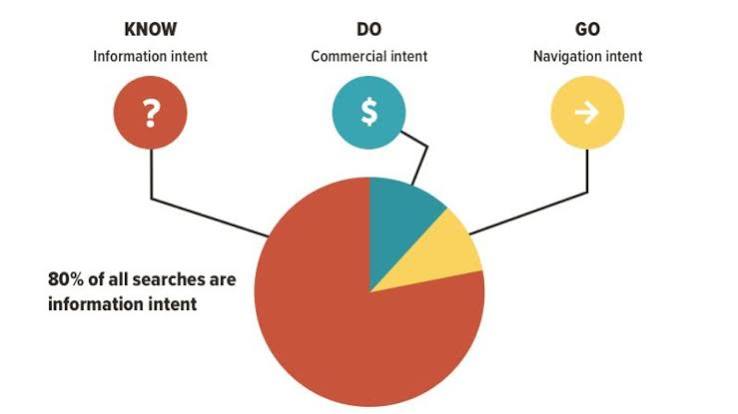
Search intent is commonly divided into four broad categories.
Informational Intent
The user wants to learn something.
Examples include:
What causes a leaking roof?
How does SEO work?
Why isn't my refrigerator cooling?
What is PPC advertising?
Blog articles, guides, FAQs, and educational resources work well for informational searches.
Navigational Intent
The user wants to reach a particular website or brand.
Examples might include searches for a specific company name followed by terms such as:
Login
Contact
Reviews
Website
These users generally already know where they want to go.
Commercial Investigation
The user is researching options before making a decision.
Examples include:
Best roofing companies near me
SEO company reviews
Google Ads vs Facebook Ads
Best appliance repair company
These searchers may not be ready to purchase immediately, but they're actively comparing choices.
Transactional Intent
The user is ready to take action.
Examples include:
Hire SEO company
Schedule furnace repair
Request roofing estimate
Book cleaning service
These searches can be extremely valuable because the person is much closer to becoming a customer.
High Search Volume Doesn't Always Mean High Value
Imagine you're an insurance agency.
A keyword such as:
"what is car insurance"
could receive substantial search volume.
However, many people making that search may simply be researching insurance.
Compare that with:
"car insurance agent near me"
The second keyword could have lower search volume but significantly stronger purchasing intent.
Which visitor would you rather attract?
Traffic numbers can look impressive in a monthly marketing report, but traffic doesn't pay the bills.
Customers do.
Your Page Type Should Match the Search
One of the biggest SEO mistakes businesses make is targeting every keyword with the same type of page.
Different searches require different content.
Suppose someone searches:
"how often should a roof be inspected?"
A detailed educational blog makes sense.
But someone searching:
"roof inspection Rockford IL"
probably doesn't want a 2,000-word history lesson about roofing.
They want information about:
Roof inspection services
Availability
Service area
Experience
How to schedule
What the inspection includes
Matching the page to the user's objective improves both SEO relevance and conversion opportunities.
Google Is Trying to Understand Meaning
Search engines have become much better at interpreting context.
Google explains that its automated ranking systems evaluate many signals to determine which results are most relevant and helpful for a query.
That means repeating an exact keyword dozens of times isn't a substitute for answering the user's question.
A page about local SEO can naturally discuss:
Google Business Profile
Local citations
Reviews
Location pages
Maps
Service areas
Search engines can understand the relationship between these concepts.
Good writing should sound like it was created for customers, not robots.
Search Intent Should Guide Keyword Research
Keyword research shouldn't stop after finding search volume and competition estimates.
Ask:
Why is someone searching this phrase?
What answer are they expecting?
Are they researching or buying?
What type of page currently ranks?
Can our business genuinely satisfy that search?
Looking at existing search results can provide useful clues.
If Google primarily displays educational articles for a keyword, creating an aggressive sales page may not match what users want.
If service pages dominate the results, a blog post may struggle to compete.
Search Intent Can Improve Conversion Rates
Matching search intent isn't solely an SEO strategy.
It's also a conversion strategy.
Imagine clicking an advertisement for "emergency furnace repair" and landing on a generic HVAC homepage discussing company history.
You'd probably wonder where the emergency service information went.
The same principle applies to organic search.
When the landing page immediately matches what someone searched, visitors are more likely to:
Continue reading
Call the business
Complete a form
Request an estimate
Schedule an appointment
Relevance reduces friction.
Build Content for Different Stages of the Customer Journey
Potential customers don't all arrive ready to purchase.
Some are researching.
Some are comparing.
Others need help immediately.
Your website should contain content serving each stage.
For example, a remodeling company could publish:
Informational:
"How Much Does a Kitchen Remodel Cost?"
Commercial:
"Questions to Ask Before Hiring a Kitchen Remodeling Contractor"
Transactional:
"Kitchen Remodeling Services in Rockford, IL"
These pages serve different purposes while supporting the same overall topic.
Internal links can then connect readers from educational content to relevant service pages.
Don't Force Keywords Into Unrelated Pages
Another common mistake is trying to make one page rank for every possible service.
A homepage shouldn't have to explain every detail about:
SEO
Google Ads
Social media
Website design
Reputation management
Email marketing
Dedicated service pages provide more room to satisfy specific search intent.
For example, someone interested specifically in paid advertising should be able to visit a focused pay-per-click advertising page.
Likewise, visitors researching social media should have access to detailed social media marketing information.
Clear structure benefits customers and search engines alike.
Search Intent Changes Over Time
Search behavior isn't static.
New technologies, products, terminology, and customer expectations can change what people want from particular searches.
That's why existing content should periodically be reviewed.
Ask whether your page still answers the question better than competing results.
Sometimes updating an existing article can be more valuable than publishing another one.
How Shane Worley, the Marketing 1 Uses Search Intent
At Shane Worley, the Marketing 1, keyword research is only the beginning.
We evaluate the purpose behind searches and develop content around the questions potential customers are actually asking.
That includes connecting:
SEO
Website structure
Service pages
Blog content
Local search
Conversion optimization
The goal isn't simply increasing traffic.
It's attracting the right traffic.
Our digital marketing services focus on helping businesses connect visibility with measurable opportunities for growth.
Final Thoughts
Keywords tell you what someone typed.
Search intent tells you why they typed it.
That distinction matters.
A successful SEO strategy should attract visitors whose needs align with your services while providing the information they expect to find.
Instead of chasing the highest-volume keywords, focus on searches that bring your business closer to the people who genuinely need what you offer.
That's how SEO becomes more than a rankings exercise. It becomes a customer acquisition strategy.
Explore additional resources on the Shane Worley, the Marketing 1 blog, or contact us to discuss an SEO strategy built around qualified traffic and measurable results.