
Why Service Area Pages Matter for Local SEO
Why Service Area Pages Matter for Local SEO
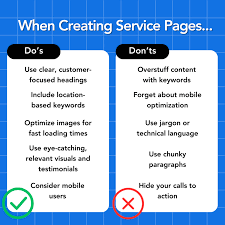
If your business serves customers beyond the city where your office is located, your website needs to communicate that clearly.
A roofing contractor based in one community may serve homeowners across several counties. An appliance repair company might travel throughout an entire metropolitan area. A digital marketing agency can have a physical headquarters in Illinois while working with businesses throughout the state and across the country.
Simply adding a long list of cities to the bottom of your homepage isn't always the strongest way to communicate that geographic reach.
That's where service area pages can help.
A well-developed service area page gives potential customers useful information about the services available in their community while helping search engines understand the geographic areas associated with your business.
Done correctly, these pages can become valuable components of a comprehensive local SEO strategy.
What Is a Service Area Page?
A service area page is a webpage created around a specific geographic market your business legitimately serves.
For example, a contractor headquartered near Rockford might have individual pages for communities such as:
Rockford
Loves Park
Roscoe
Belvidere
Machesney Park
Each page should explain how the company serves customers within that particular community.
The purpose isn't simply inserting another city name into your website.
A good location page provides useful information that helps someone in that area decide whether your business can solve their problem.
Why Local Search Intent Matters
Location often signals strong purchasing intent.
Consider the difference between:
"How does furnace repair work?"
and:
"Furnace repair Rockford IL"
The first search is primarily informational.
The second suggests the person may be actively looking for a company that provides furnace repair in Rockford.
That geographic modifier gives businesses an opportunity to create content that directly matches what the customer needs.
A dedicated page can clearly explain:
Services available
Geographic coverage
How to request service
Why customers choose the company
Frequently asked questions
Relevant local information
That creates a stronger match than expecting every local search to land on a generic homepage.
One Page Shouldn't Target Every City
Some businesses try to make a single homepage rank across dozens of communities.
They add paragraphs such as:
"Serving Rockford, Loves Park, Roscoe, Belvidere, Machesney Park, Cherry Valley, South Beloit..."
Listing your service areas is helpful, but expecting one page to compete strongly for every city can limit your options.
Individual service area pages provide more space to address customer needs within each market.
They also create clearer internal pathways throughout your website.
For example, your main service page can link to relevant city pages, while those city pages link back to the core service information.
Don't Duplicate the Same Page 30 Times
This is where many local SEO strategies go sideways.
A business creates one location page, duplicates it 30 times, and changes only the city name.
You end up with sentences such as:
"Looking for roofing in Rockford?"
"Looking for roofing in Roscoe?"
"Looking for roofing in Belvidere?"
Everything else remains identical.
That's not creating useful local content. It's playing Mad Libs with city names.
Google emphasizes creating helpful, people-first content rather than pages primarily created to manipulate search rankings.
Each location page should have enough unique value to justify its existence.
What Makes a Good Service Area Page?
A strong page should answer questions a local customer might actually have.
Depending on the business, useful elements can include:
Services Available in That Area
Explain which services customers can request.
Don't assume visitors will navigate elsewhere to figure it out.
Local Customer Needs
Different communities can have different housing, climate, commercial, or service characteristics.
Discuss these differences where they're genuinely relevant.
Service Process
Explain what happens after someone contacts your company.
Customers appreciate knowing what to expect.
Customer Reviews
If you have legitimate reviews from customers in that community, they can provide valuable social proof.
Completed Projects
Businesses such as contractors, landscapers, remodelers, and painters can showcase work completed nearby.
Frequently Asked Questions
Answer questions specific to service availability, scheduling, estimates, travel, or local considerations.
The page should still make sense if someone removed the city name from the heading.
That's a useful quality test.
Location Pages and Google Business Profile Are Different
Creating a service area page doesn't mean you should create a separate Google Business Profile for every city.
Google has specific eligibility requirements for Business Profiles.
A website can legitimately contain pages describing communities your business serves without pretending you maintain physical offices in each one.
Accuracy matters.
If you don't have an office in a city, don't write content implying that you do.
Instead, say you serve customers in that community.
Transparency builds trust with customers and keeps your local marketing strategy grounded in reality.
Internal Linking Strengthens Location Pages
Service area pages shouldn't exist as isolated islands.
Connect them naturally with related content.
A Rockford SEO page, for example, could link to:
Your main SEO services
Relevant blog articles
Other marketing services
Your contact page
Likewise, relevant service pages can link back to the location page.
This helps visitors explore related information while giving search engines additional context about how your content fits together.
Local Pages Need Strong Calls-to-Action
Ranking a city page is only useful if it generates business.
Each location page should make contacting you simple.
Consider including:
Click-to-call buttons
Quote request forms
Consultation scheduling
Contact buttons
Clear service availability
Someone searching for a local provider may already be close to making a decision.
Don't make them hunt for your phone number.
Schema Can Support Geographic Context
Structured data can help search engines understand information about your organization, services, and business location.
Schema markup should accurately represent the information visible on your website.
It shouldn't be used to manufacture fictional offices or locations.
Combined with accurate business information, strong content, internal linking, and local citations, structured data contributes to a cleaner technical foundation.
Service Area Pages Can Support Paid Advertising Too
Location pages aren't valuable exclusively for organic SEO.
They can also become useful landing pages for geographically focused Google Ads campaigns.
Imagine running ads specifically for customers in Rockford.
Sending those users to a page discussing services available in Rockford creates a closer connection between:
Search → Advertisement → Landing Page
That relevance can improve the overall customer experience.
The same page can support organic search while complementing paid advertising.
Track Which Cities Generate Leads
Once service area pages are published, measure performance.
Don't simply ask whether they rank.
Track:
Organic traffic
Phone calls
Form submissions
Conversion rates
Search queries
Geographic lead sources
You may discover certain markets generate significantly more qualified leads than others.
That information can guide future SEO, advertising, and social media marketing decisions.
Start With Your Most Important Markets
You don't need 100 location pages tomorrow.
Start with the communities that genuinely matter most to your business.
Ask:
Where do our customers currently come from?
Which cities generate our best leads?
Where can we realistically provide service?
Which markets have growth potential?
Do we have enough information to create a useful page?
Five excellent location pages are better than 50 nearly identical ones.
Quality wins again.
How Shane Worley, the Marketing 1 Approaches Local SEO
At Shane Worley, the Marketing 1, we develop local SEO strategies around actual customer behavior and legitimate service areas.
Location pages are connected with:
Technical SEO
Google Business Profile optimization
Local citations
Internal linking
Content development
Conversion optimization
Website performance
Our digital marketing services focus on creating a connected strategy rather than publishing pages simply to increase URL counts.
The objective is visibility that produces opportunities for real businesses.
Final Thoughts
Service area pages can be powerful local SEO assets when they're created for customers rather than search engines alone.
A good location page tells someone:
Yes, we serve your community. Here's what we offer. Here's why customers choose us. Here's how to get started.
That's far more valuable than repeating the same paragraph across dozens of city names.
If your business serves multiple communities but your website doesn't clearly represent those markets, service area pages may provide an opportunity to expand your local search visibility.
Visit the Shane Worley, the Marketing 1 blog for additional SEO strategies, or contact us to discuss building a local SEO strategy around the communities your business actually serves.