
Why Your Competitors Rank Higher on Google (And How to Catch Them)
Why Your Competitors Rank Higher on Google (And How to Catch Them)
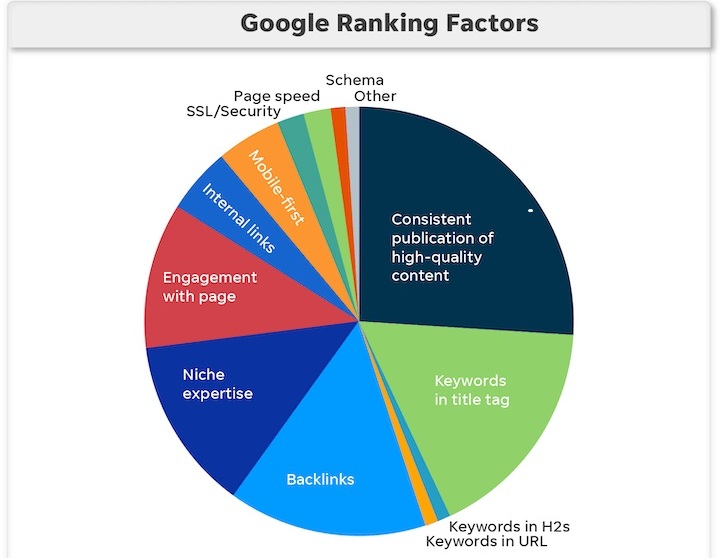
Have you ever searched for your own services on Google only to find competitors appearing above your business? If so, you're not alone. It's one of the most common questions we hear from business owners.
Many assume their competitors are simply spending more money on marketing. While advertising can certainly increase visibility, it doesn't determine where businesses appear in the organic search results. Those rankings are influenced by many factors, including website quality, local SEO, content, user experience, and online authority.
The good news is that if a competitor can earn strong rankings, so can you. Understanding what Google looks for gives you the opportunity to identify weaknesses, improve your website, and gradually move higher in the search results.
Let's explore why some businesses consistently outrank others and what you can do to close the gap.
Google Focuses on Relevance First
Google's goal is simple: provide users with the most helpful answer for every search.
When someone searches for "roof repair near me" or "family dentist in Rockford," Google evaluates which businesses appear most relevant to that search.
Relevance is influenced by factors such as:
Website content
Service descriptions
Business categories
Geographic location
Customer reviews
Google Business Profile information
If your website doesn't clearly explain what you do and where you provide services, Google has less information to work with.
Clear, informative content improves both user understanding and search visibility.
Strong Content Answers Customer Questions
Many businesses create service pages that contain only a few paragraphs.
Meanwhile, competitors publish detailed pages explaining:
Their services
Their process
Frequently asked questions
Service areas
Benefits
Common customer concerns
Google favors content that genuinely helps users.
According to Google Search Central, helpful, people-first content is one of the strongest long-term strategies for improving search visibility.
Instead of asking how little content you can publish, ask how thoroughly you can answer your customers' questions.
Technical SEO Still Matters
Even excellent content can struggle if technical issues prevent search engines from understanding your website.
Important technical elements include:
Proper page titles
Meta descriptions
Heading hierarchy
XML sitemap
Schema markup
Canonical tags
Internal linking
Mobile usability
HTTPS security
These behind-the-scenes improvements help search engines crawl and interpret your website more efficiently.
Technical SEO doesn't usually produce overnight results, but it creates the foundation for long-term success.
Local SEO Gives Nearby Customers More Ways to Find You
If you serve specific cities or regions, local optimization is essential.
Businesses that rank well locally often have:
Optimized Google Business Profiles
Consistent business information
Location-specific service pages
Customer reviews
Local citations
Service area content
Google uses this information to determine which businesses are most relevant for nearby searches.
Even small improvements in local SEO can significantly increase visibility within your service area.
Reviews Influence More Than Customer Decisions
Online reviews build trust with potential customers.
They also provide Google with additional signals about your business.
Businesses should encourage satisfied customers to leave honest reviews regularly.
Responding professionally to every review demonstrates customer engagement while reinforcing your reputation.
Quality reviews remain far more valuable than large quantities of generic feedback.
Website Speed Can Affect User Experience
Visitors expect websites to load quickly.
Slow websites often experience:
Higher bounce rates
Lower engagement
Fewer conversions
Common speed issues include:
Oversized images
Poor hosting
Excessive plugins
Unoptimized scripts
Google considers page experience among many ranking factors because fast websites generally provide a better experience for users.
Improving speed benefits both visitors and search performance.
Mobile Experience Is No Longer Optional
Most local searches now happen on smartphones.
Google primarily evaluates the mobile version of your website through mobile-first indexing.
Your website should provide:
Readable text
Easy navigation
Click-to-call buttons
Fast loading
Responsive layouts
Simple contact forms
If mobile visitors struggle to use your website, they may quickly move on to another business.
Internal Linking Helps Search Engines Understand Your Website
Many business owners overlook internal linking.
Every important page should naturally connect to related pages.
For example:
An article about website design can link to:
SEO services
Google Ads management
Website development
Contact page
Related blog articles
Internal links improve navigation while helping search engines understand how your content fits together.
A well-organized website is easier for both visitors and search engines to explore.
Consistency Builds Authority
Businesses that consistently publish helpful content often outperform competitors who update their websites only occasionally.
Examples include:
Blog articles
Service page improvements
FAQ updates
Case studies
Customer testimonials
Portfolio additions
Search visibility often improves gradually through steady effort rather than dramatic changes.
Small improvements made consistently can produce impressive long-term results.
Learn From Your Competitors
Your competitors can become valuable sources of insight.
Review their websites and ask:
What topics do they cover?
How detailed are their service pages?
Do they publish blogs regularly?
How many reviews do they have?
Is their website easier to navigate?
Do they answer more customer questions?
The goal isn't to copy them.
It's to identify opportunities where your business can provide even greater value.
Avoid Shortcuts
Some businesses search for quick ranking tricks.
Examples include:
Keyword stuffing
Purchasing low-quality backlinks
Copying website content
Creating duplicate pages
These practices rarely produce lasting results and may violate Google's guidelines.
Long-term success comes from providing useful information, maintaining a technically sound website, and creating an excellent experience for visitors.
How Shane Worley, the Marketing 1 Helps Businesses Compete
At Shane Worley, the Marketing 1, we believe successful SEO begins with understanding where your business stands today.
We analyze:
Your website
Your competitors
Local search opportunities
Technical SEO
Content quality
Google Business Profile
Conversion opportunities
From there, we develop strategies focused on sustainable growth rather than temporary gains.
Our goal is to help businesses build stronger online visibility while attracting qualified customers who are actively searching for their services.
Final Thoughts
Ranking higher on Google isn't about luck or secret formulas. It's the result of consistently improving your website, creating helpful content, optimizing your local presence, and providing an excellent user experience.
If your competitors currently rank above you, don't view it as a setback. Instead, use it as motivation to identify opportunities and strengthen your online presence.
At Shane Worley, the Marketing 1, we help businesses throughout Illinois and across the United States improve search visibility through SEO, website optimization, Google Ads, local search strategies, and content marketing that delivers measurable results.